







For several years now, companies in the cosmetics industry have been committed to the eco-design of their products, and in particular their packaging. The reduction of resources, reuse, incorporation of recycled materials and recyclability are among their priorities.
However, notes Febea (Fédération des entreprises de la beauté), when it comes to assessing the recyclability of packaging, the regulatory framework at European and even international level remains unclear, and the technical and economic reality of recycling can vary considerably from one country to another.
A collaborative industry initiative
In this context, and without waiting for the harmonized European Packaging & Packaging Waste Regulation (PPWR), Febea and the professional association of plastic packaging manufacturers (Elipso) have joined forces to publish a guide to the recyclability of cosmetics packaging.
The result of close collaboration between packaging manufacturers and marketers, this guide takes stock of packaging recyclability in Europe, and identifies the technical difficulties and potential levers for improving the recyclability of plastic cosmetics packaging. The idea is to anticipate European regulatory requirements and facilitate the eco-design of packaging.
The document is divided into two main sections. The first section establishes a general overview of recyclability, taking into account the regulatory frameworks in force in France, Europe and internationally, the general principles of recyclability (collection, sorting and regeneration) and the methods and tools for analyzing and measuring the recyclability of cosmetic packaging, maintaining the multi-scale approach (French, European and international).
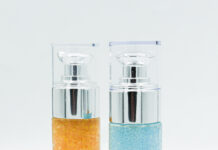
In the second part of the guide, six case studies corresponding to emblematic packaging categories in the cosmetics sector are detailed. They concern tubes, cases/pallets/powder dispensers, sticks, pumps, jars and dip-ins.
For each of these cases, the predominant material and its recycling channel (if any) were first identified. The most frequent disruptive elements to sorting and recycling were then determined: adhesives, decorations (metal or labels, for example), black color, packaging containing several different materials, etc. Finally, possible solutions were proposed and their impact assessed. Finally, possible solutions were proposed and their impact assessed. For example, to replace plastics which have no recycling channel, such as styrenics in make-up cases (which are in the same family as polystyrenes), alternatives with recyclable materials exist, but they will have a major impact on investment in new production molds and on the final aesthetic properties of the packaging: a compromise on shape and appearance will have to be found (gloss, transparency, etc.). These recommendations are intended to guide all cosmetics companies along the road to recyclability and reinforce the sector's commitment to the ecological transition.
2030 outlook
"This guide goes far beyond a simple technical document: it embodies a genuine eco-design tool for the entire cosmetics industry, and testifies to our collective commitment to the ecological transition. By working together - packaging manufacturers and marketers - we are sketching out the contours of a more responsible cosmetics industry, where each packaging becomes a concrete opportunity to reduce our environmental impact. Our goal is to recycle 100 % of cosmetics packaging, while preserving excellence in product quality and safety, says Emmanuel Guichard, General Delegate of Febea.
"The Febea-Elipso guide is more than just a regulatory decision-making tool: it provides a concrete framework for manufacturers' eco-design commitments for cosmetics packaging recycling, even before January 1, 2030, the date of application of the recyclability obligations set out in the Packaging and Packaging Waste Regulation (PPWR). In addition to improving recycling conditions, this voluntary anticipation on the part of manufacturers and marketers will make it possible, during the 2025-2030 period, to steer industrial investments in a responsible and clear manner. This successful pooling of expertise has already been achieved for the integration of recycled materials, and deserves to be transposed to other circular economy topics (reuse, for example) and to other sectors!says Gaël Bouquet, Elipso's Managing Director.
The authors of the guide point out that the transition to fully recyclable packaging will require effective cooperation between all players in the industry in terms of packaging innovation (materials) and design (shape and decoration), investment in production processes and the design of new molds adapted to these new types of packaging, and consumer awareness of these new market codes. These far-reaching changes will require a reassessment of all packaging typologies, especially those used for make-up, so that they are designed with recyclability in mind.
An English version of this guide is currently being prepared to facilitate international exchanges.
The document in French can be downloaded by following this link link.