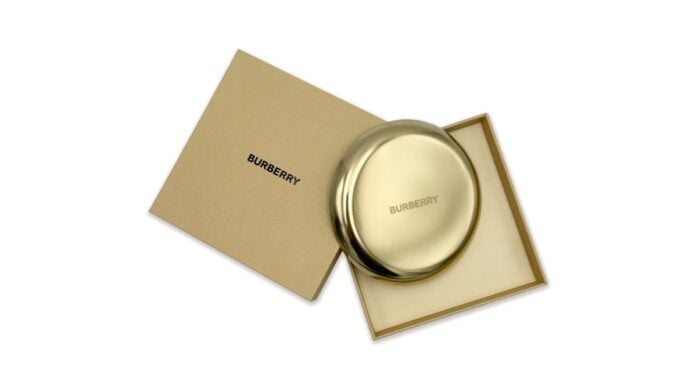





To celebrate Mother's Day, Burberry Beauty is offering an elegant, cup-shaped pocket organizer.
The Pure Trade group, which specializes in the design of top-of-the-range primary and secondary packaging, has created this pocket tin in mirror-polished gold-plated stainless steel. The brand logo is laser-engraved on the back.
This piece is presented in a refined cloche box. The outside of the box is wrapped in trench-effect twill paper in the brand's emblematic colors. The glossy black logo is soberly silk-screened on the lid.
Liftilience is a natural film-forming active ingredient derived from chestnut and composed of functionalized helical biopolymers obtained through the unique FHB technology*. Combining controlled hydrolysis and ionic functionalization, the latter gives Liftilience an optimized, scientifically proven tensor effect and adhesion properties. As a result, Silab's 6th generation multi-purpose tensor offers multiple, rapid and long-lasting cosmetic benefits for face and body. In 2025, Silab brings additional efficacy data to this novel phytotensor.
The cosmetic benefits provided by Liftilience were consolidated by an evaluation of the rapid lifting effect of the product formulated at 0.32 % in gel form on the face. Results show that Liftilience significantly lifts crow's feet wrinkles as early as 15 minutes after a single application.
Tensor effect on the body
To complement Liftilience's already proven sensorial and rapid tightening effects, Silab has evaluated its long-lasting tightening effect on the body. The results show that, 4 hours after application of a gel formula containing Liftilience at 0.16 % to the thighs, skin firmness is significantly increased by 5 %, elasticity by 8 % and tone by 34 %. The tensor effect of Liftilience on the body is thus reinforced.
Long-term cosmetic benefits
Silab reports that Liftilience is recognized for its ability to deliver both rapid (3 to 15 minutes) and long-lasting (4 to 12 hours) benefits. In 2025, Silab decided to study its long-term action as well. Thus, after 21 days of twice-daily application, Liftilience provides an anti-wrinkle effect by significantly smoothing out forehead wrinkles (-11%). A significant effect is also observed on complexion radiance (reflection: +14 %; pink color: +17 %; olive color: -14 %; eye fatigue: -17 %). These results are confirmed by subjective evaluation, with 78 % of volunteers finding their fine lines and wrinkles less visible, and 91% finding their skin more luminous. What's more, 100 % of them found their skin softer.
These additional studies therefore confirm Liftilience's positioning as a new-generation multi-purpose tensor treatment for face and body, thanks to its multiple rapid, long-lasting and long-term benefits for face and body.
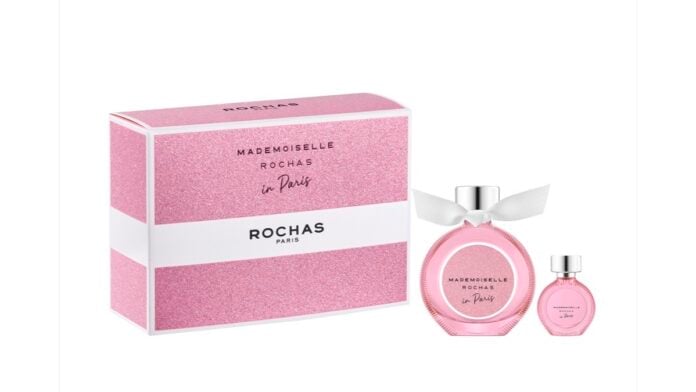
Elegant with its glittery pink decor, the Mademoiselle Rochas case adopts a more environmentally-friendly version for its annual campaign.
Designed to hold the 50-ml Mademoiselle Rochas eau de parfum and its 4.5-ml mini, both held in place by a cardboard wedge, the new promotional case underlines Rochas' commitment and highlights its more sustainable approach.
Rochas entrusted Verpack with the production of the case. The manufacturer considered the environmental impact of the glitter decoration. The solution proposed via the Tours site was to use a screen-printed varnish containing compostable and biodegradable glitter, so that it did not conflict with the recycling process.
The Verpack teams were able to distinguish themselves from the Interparfums group through a search for solutions centered on the stumbling block represented by the decor.
Despite the technical constraints and thanks to the solution found by Verpack, the box retains its premium codes while adopting a virtuous positioning, in line with the CSR objectives of the Rochas brand.
Printer Martinenq has selected references from Italian papermaker Fedrigoni, specialized in the creation and manufacture of top-of-the-range paper, for its packaging.
Since 2024, Martinenq has been innovating in the perfume segment, extending its expertise to packaging and offering products dedicated to fragrance discovery and cosmetics testing. For its new products, the printer has chosen two flagship Fedrigoni references.
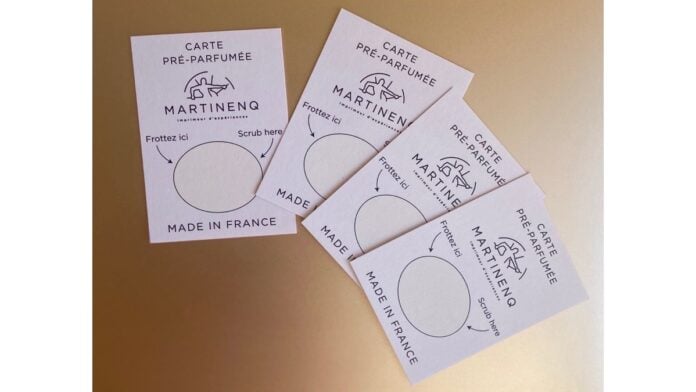
Fedrigoni's Carte à Parfum range comprises uncoated, FSC-certified papers made from long fibers. It is available in five grammages (from 140 to 350 gr/m2). Martinenq chose this reference for its printability, resistance to humidity and perfect reproduction of olfactory notes.
"Considered a niche product when it was created 15 years ago, the Cartes à Parfum range has now become THE benchmark for brands and converters, thanks to its technical and aesthetic advantages. Our collaboration with Martinenq is a fine example of the partnership approach we value so highly".explains Céline Bertuzzi, Marketing Director of Fedrigoni Special Papers.
A "wow" 100 % blotter
Martinenq has chosen to apply a "hidden message" to the perfume card, using a "revealing" ink. Once printed, the image is then covered by a thin translucent layer applied in white silkscreen. Under the effect of vaporization, this film disappears, revealing the message (logo, motif, words...). The "wow" effect supports the marketing gesture and is renewed after drying. Shiseido adopted this concept to promote the launch of its perfume Sel d'Issey.
The magic of microencapsulation
Martinenq has also chosen the 300g Carte à Parfum to introduce brands to its microencapsulation process. The process relies on micro-cells that trap the juice. These are mixed with the ink before printing on all or part of the card, before releasing their fragrance by bursting when rubbed. With this technology, the fragrance can be preserved for perfect olfactory reproduction at any given moment.
A card spatula
The Symbol Card reference is used for a plastic-free cardboard spatula. Ideal for testing cream at the point of sale, this test tool has been developed from Fedrigoni's Symbol Card FSC (582g) coated on both sides for a totally resistant and slippery surface, with no risk of wrinkling. It can be decorated at the top and even embossed. Martinenq offers it in a choice of delicate sheaths, also made from Symbol Card coated on one side (210 gr), so it can be decorated as required.
On the occasion of in-cosmetics Global (April 8-10, 2025, Amsterdam), Basf has updated its sunscreen simulator, its digital laboratory for the development and optimization of sunscreen product formulations.
A key technical innovation is the ability to select different formulation types, including oil-in-water (O/W), water-in-oil (W/O) or oils, to explore the effect of sunscreen formulation type on performance. "Taking into account the impact of formulation type and viscosity on SPF is a significant step towards more accurate SPF simulation and prediction".said Myriam Sohn, senior researcher at Basf's global technical center for sun care.
Improved calculations
Thanks to this update, customers have access to solubility calculations and evaluations. By connecting the filtration system to specific emollients, they get clear information on the dissolved percentage of each solid UV filter, and can assess the interactions between these ingredients to streamline their formulation development.
Another function helps formulators better understand regulatory requirements. It helps them identify the right UV filters to meet specific market needs by providing SPF and UVA protection ratings for selected regions. In addition, Basf's EcoSun Pass criterion provides information on the environmental compatibility of selected UV filter combinations.
Get inspired" course and project follow-up
Another new feature is the "Get inspired" guided tour, which allows users to browse Basf's solar formulation database and access prototypes tested in-house by the company's global and regional laboratories. An improved user interface facilitates navigation through the tool's functionalities. Sorting functionality with various filtering options, including regions, project status or keywords, enables users to easily track and search for specific projects.
D'lite integration
The sunscreen simulator has benefited from continuous improvements over the past 25 years to increase the accuracy of predictions. With its integration into D'lite, Basf's digital knowledge services platform for the personal care industry, users can leverage the Basf ecosystem to increase efficiency and innovation throughout the formulation development process. Users can now explore the sunscreen market and review consumer products. This enables a more comprehensive understanding of product offerings and market trends. The sunscreen simulator will be accessible to all registered D'lite users.
The SFC (Société française de cosmétologie), supported by L'Oréal Recherche & Innovation, will present the 3rd edition of the Sustainability Challenge on Tuesday, September 16, 2025, in Cannes (06) during the 35th IFSCC Congress (International Federation of Societies of Cosmetic Chemists).
Startups and academics are invited to present innovations addressing the need for sustainability in the cosmetics industry to a global audience of industry experts, potential investors/employers and stakeholders.
The key: the opportunity to make contact with leading researchers, brands and suppliers in the cosmetics science community.
The eight finalists will receive a pass to the first day of IFSCC 2025 (September 16), as well as exposure on IFSCC and SFC social networks.
The winner will receive a one-year SFC membership (including access to the IFSCC website), promotion on IFSCC social networks and a ticket to the IFSCC 2026 Congress in Australia.
Reuse Economy Expo: the European trade show that connects players and solutions to co-construct and develop economic models for reuse. It opens its doors on May 26 and 27 at the Parc Floral in Paris. Although bulk packaging is well known in the food sector, the cosmetics industry is pushing the whole sector forward. Explanations from the director of Bulk network and show organizer: Célia Rennesson
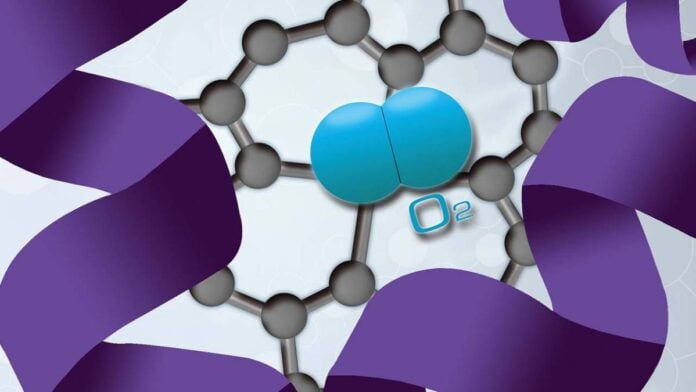
Silab unveiled additional studies at in-cosmetics (Amsterdam, April 8-10, 2025). One of these studies concerns Oxygeskin, a natural radiance-enhancing active ingredient derived from nasturtium, which revitalizes skin oxygenation under conditions of chronological aging or digital pollution. Skin quality is improved and a healthy glow is restored.
Effect on expression of miRNAs carried by extracellular vesicles
According to Silab, Oxygeskin reduces the expression of miRNAs that repress biological functions essential to the skin and are present in extracellular vesicles, including exosomes.
Extracellular vesicles (EVs), including exosomes, act as biological messengers, carrying proteins, lipids and nucleic acids (miRNAs) between a transmitting and a receiving cell. In cosmetics, exosomes have been shown to have anti-aging benefits, as well as regenerative and radiance-enhancing properties. In this context, Silab has chosen to explore the regulation of oxygenation by exosomes.
The results show that, when tested at 0.25 % on aged fibroblasts, Oxygeskin significantly reduces the expression of miRNAs repressing biological pathways :
oxygenation (HIF-1α) and cellular energy production (ATP);
essential to dermal homeostasis, such as hydration, proliferation and organization of the dermal matrix;
essential to epidermal homeostasis, such as epidermal differentiation, proliferation and regeneration.
Cosmetic benefits in a body care product
In 2025, Silab also studied the effect of Oxygeskin on the body. To this end, the active ingredient was applied to 1 % on the thighs. After 14 days of twice-daily application, the a* parameter, characteristic of skin oxygenation, increased by 4.5 %. A significant smoothing action on microrelief was also observed (-6.3 %) and confirmed by the volunteers themselves, 89 % of whom considered their skin to be velvety (subjective evaluation). In addition, 83 % and 89 % of volunteers respectively felt their skin was more radiant and sublimated. Finally, Oxygeskin also significantly improves skin firmness for 7 %.
"These additional studies confirm Oxygeskin's position as a real breath of oxygen. The active ingredient is recommended in all face and body care products designed to revive skin radiance".says Silab.
Basf Aroma Ingredients has launched LMenthol FCC rPCF, its first reduced carbon footprint product (rPCF). Further rPCF product launches are planned to help customers achieve their ambitious Scope 3 carbon reduction targets.
The German chemist's rPCF flavor ingredients offer a reduction in product carbon footprint of around 10 to 15 % compared with conventional Basf products. The carbon footprints of products in Basf's rPCF range are calculated in accordance with the guidelines of the "Together for Sustainability" (TfS) initiative. TÜV Rheinland has certified that the calculation method used by Basf complies with this standard.
"Bringing L-Menthol FCC rPCF to market represents an important milestone in our commitment to sustainable development, says Steffen Götz, Vice-President of Aroma Ingredients at Basf. The addition of rPCF products to our portfolio makes us the first aroma ingredients manufacturer that enables its customers to actively pursue CO2 emission reduction beyond their own premises."
Collaboration between Basf and Colgate-Palmolive
Colgate-Palmolive was one of the first customers to implement Basf's new product offering. "Colgate-Palmolive aims to achieve net zero carbon emissions by 2040, with the majority of these emissions associated with the raw materials and packaging materials we source from suppliers. The transition to Menthol with a reduced carbon footprint is the result of effective collaboration between Colgate-Palmolive and Basf teams, helping us to make significant progress towards our goal while maintaining the highest standards of product quality."says Lauren Richardson, Chief Procurement Officer at Colgate-Palmolive Company.
Mass balance approach
Basf uses a mass balance approach at its Verbund sites for the production of rPCF flavor ingredients: a defined share of conventional raw materials or utilities is replaced by raw materials or utilities with a reduced PCF. This share is allocated to rPCF products and reduces their carbon footprint accordingly.
The production process remains unchanged, enabling customers to switch to rPCF products without having to requalify. " By deploying the mass balance approach, we can improve the durability of our products while ensuring that customers can count on the same quality they're used to with our conventional products."explains Dr Cordula Mock-Knoblauch, Head of Sustainability Accelerator, Basf Aroma Ingredients.
Basf's rPCF portfolio will grow in line with customer demand. The focus will be on high-volume products because of their ability to significantly reduce our customers' Scope 3 emissions. In addition to L-Menthol FCC rPCF, Citronellol rPCF and Geraniol rPCF are scheduled for launch in 2025.
Photo: Basf SE - L-Menthol production plant at Basf's Ludwigshafen site, Germany, also producing L-Menthol FCC rPCF from 2024.
STH Biotech announces the commercial launch of a bioproduct ingredient from cultivated hemp roots in vitrorich in molecules of interest to the cosmetics market. Co-developed with Inabata France, this biosourced, non-GMO ingredient boasts anti-aging properties.
French start-upSTH Biotech has developed an innovative bioproduction process for hemp roots: Hairy Root. According to the young company, this process is capable of boosting the yield of active substances of interest to cosmetics (triterpenes, alkaloids). Its Sativitro platform, set up in a controlled laboratory environment, boosts the production of an alkaloid molecule with anti-aging properties by a factor of 100, compared with the agricultural cultivation of hemp seeds.
Inawave BiotecHemp, a first ingredient extracted from this biomass produced by STH Biotech and formulated by Inabata France (the French subsidiary of the Japanese Inabata group), contains, according to STH Biotech, anti-aging active ingredients that are more effective on certain markers than resveratrol, a molecule derived from grapevines and widely used in cosmetics.
STH Biotech and Inabata France announced its commercial launch on April 8, 2025, at the in-Cosmetics Global trade show in Amsterdam.
" STH Biotech brings Hairy Root bioproduction to the cosmetics industry, promoting an innovation that ensures quality, sustainable and stable sourcing in the face of climate change. Currently raising funds, we have plans to develop other cosmetic ingredients. We are also pursuing our R&D on cannabinoids for applications in the healthcare sector, explainsHéloïse Mailhac, CEO of STH Biotech.
"Inabata France continues to expand its Inawave range of eco-friendly extracts. The association with Sativitro technology marks an opening towards the biotech range for Inabata. The results obtained are very promising: Inawave BiotecHemp combines performance and sustainability, everything the cosmetics market demands. The positive feedback we received at the show will prompt us to consider extending Sativitro technology to other plants, and to further strengthen our partnership with STH Biotech.says Pascal Plejewski, Head of sales at Inabata France.
Winners of a European Women Rising Innovators award on April 3, 2025, STH BIOTECH founders Héloïse Mailhac, CEO, and Naomi Kaminsky, CTO, are promoting this new Hairy Root bioproduction technology on the cosmetics market: according to them, a whole range of new ingredients can be developed on the basis of different bioactive compounds identified in hemp roots or derived from other plants.
STH Biotech's bioproduction process begins with germination in vitro of a hemp seed, whose seedling is brought into contact with a bacterium to be transformed into roots. The hemp roots are then grown in bioreactors in a medium containing sugar, vitamins and water. The active molecules required for the formulation of ingredients sold to the cosmetics industry are extracted from this plant raw material.
STH Biotech's non-GMO biomass meets the sustainability objectives of the cosmetics industry. Cultivated without pesticides or heavy metals, it requires 74 times less surface area and 91 times less water than conventional field cultivation. In addition to these ecological advantages, STH's technology guarantees stable costs and production, with no seasonal variability or risk of climatic hazards.