- advertising -
Home Blog Page 175

2022, a pivotal year for essential oils - Attend Cosmed's Aromadays conference

The AROMADAYS conference, organized by Cosmed and the HE Consortium, will be held on May 1 and 2.er and December 2 in Avignon. The congress will be a must-attend event, showcasing the latest scientific advances in the face of the impact of forthcoming regulatory changes.

This 4e edition of Aromadays will bring together manufacturers of cosmetics and dietary supplements to "talk" about essential oils and give real visibility to the challenges facing the sector. A full program of conferences will enable professionals to exchange views with recognized experts:

  • Sylvain BINTEIN from the European Commission will present a preview of the new proposals to revise the REACH and CLP regulations, which since 2021 have been the focus of campaigns such as "EO in Danger" by EO producers and professionals.
  • Essential oils in food supplements and regulatory developments will be addressed by Elodie VEYRET from SYNADIET.
  • FranceAgriMer, under the supervision of the French Ministry of Agriculture, will present the results of their first study (to be completed in September 2022) on the provenance of the PPAM (Perfumed, Aromatic and Medicinal Plants) most commonly used in organic cosmetics, and the levers for promoting a French origin.
  • Pierre Fabre will complete these presentations on the sustainable sourcing of essential oils and how to promote them to consumers.
  • The subject of EH quality is also a highly critical one, and will be discussed at length during the congress. Indeed, it is, essential oils are particularly affected by the risk of fraud/adulteration (The impact of fraud on the average quality of EO is far from negligible. DNA Gensee and Botanicert will be presenting complementary innovations for the botanical and phytochemical identification of EOs to meet the quality expectations of various industries (cosmetics, pharmaceuticals, food supplements, etc.).
  • The first cosmetics consortium, "ADN & Cosmétique", dedicated to the traceability of natural resources, which brings together major players in the perfumery and cosmetics industries (L'Oreal Research Innovation, LVMH Recherche, Laboratoire Clarins, Groupe Nuxe, CRODA, Greentech), will also be presenting its activities.
  • For the 2e day of Aromadays, Prof. Robert Tisserand (author of the HE "Bible" with his work " Essential Oil Safety "), the Professor Patrice Rat from the University of Paris and the Léa Nature Laboratory will demonstrate, with scientific studies to back them up, why it's important to consider an essential oil as a whole, and not try to deduce its properties from data on its constituents.
  • The latest scientific work by the EO Consortium highlights the value of EO blends in improving the stability of EOs and preventing their oxidation, a feature never before described in the literature. This research underlines the importance of protecting EOs from oxidation to control the risk of skin sensitization.
  • Dr. Jean-Michel MOREL of the Syndicat National de la Phyto-Aromathérapie will present current thinking on the medical practice of aromatherapy in France and how to develop phyto-Aromatherapy prescribing.

There will also be many other interesting conferences on safety assessment, formulation and the ever-developing field of clinical aromatherapy.

flyer aromadays HD ok 154x216 1 Page 1- Sponsored content - Market info

Digital twins for the supply chain of the future

Maryna Grytsenko Nénon Market Development Beauty and Personal Care at Avery Dennison France- Sponsored Content - Product Info

By Maryna Grytsenko, Market Development Manager Beauty & Personal Care, Avery Dennison Smartrac

Transparency, smooth purchasing and supply chain visibility are the key issues currently facing the beauty and personal care segment. Present before the pandemic, they have since grown and accelerated.

The drive for increased transparency is driven by a commitment to ethical work practices and by consumers' heightened concern for safety and sustainability issues. According to Avery Dennison's report " The New Transparency ", 70 % of people think trust in a brand is more important today than in the past. In the film " A portrait of a supply chain "Avery Dennison captures what transparency means for people working in the heart of supply chains. The film highlights the importance of creating digital supply chains, enabling greater transparency for raw materials, products and consumers throughout a product's journey.

Cacaste is one of the organizations featured in the film.

This Mexican cocoa butter producer is at the first stage of the supply chain: sourcing and processing of raw materials. Over the years, Cacaste has developed a close working relationship with a network of producers in Tabasco, which has helped build trust and traceability in the supply chain. The connection between man and the land is closely tied to the way supply chains have developed over the centuries. More distant than ever, the end consumer and producer can be connected again, through the use of digital identities, as this growing business that supplies cocoa to beauty companies from the United States to New Zealand demonstrates.

Finally, the pandemic also highlighted supply chain vulnerabilities. Product demand has changed dramatically over the years and has highlighted the lack of agility within brand supply chains. IHL Group estimates that excess inventory and stock-outs are costing the retail industry 1.8 trillion per year due to "global stock distortion : in other words, inventory mismanagement that exceeded Canada's GDP in 2020. By creating a seamless dialogue between what's in-store, what's on reserve, and what's sold online, brands can accurately match supply and demand. The right assortment of products can be delivered at the right time and place, minimizing overproduction and waste and keeping pace with changing consumer demand.

The need for supply chain redesign

The beauty and personal care segment demands supply chain integrity, agility and visibility. Even before COVID-19, Avery Dennison data revealed that inventory accuracy was a major challenge for the beauty industry, with nearly 50 % of retailers experiencing inventory distortions.

Omnichannel beauty retailers have struggled to trade physical inventory for digital and meet the higher digital demand that has occurred over the past two years. We see the same trend in a post-pandemic scenario when inventories are not accurate. They continue to struggle to meet the increased appetite of shoppers for omnichannel, seamless and instantaneous product availability.

AD Beauty Day 2 Shot 4 RT CMYK- Sponsored Content - Product Info

The lack of end-to-end, item-level visibility and supply chain transparency has put pressure on agility, safety and sustainability. The pandemic and subsequent e-commerce boom has also caused a larger shift in consumer behavior, especially in the beauty industry. By 2020, data from McKinsey & Co. had shown a 55% and 75% decline in cosmetics and fragrance purchases compared to the previous year. However, the post-Covid era and signs of a new recession are bringing new changes and a need to adapt faster and faster to new trends at both the brand and consumer level.

It's no secret that sustainability has also become paramount for beauty and personal care brands, as well as retailers and especially their customers. The clean beauty movement has placed a focus on ingredient integrity and environmental footprints. It is common for beauty brands to overproduce products to ensure a wide selection at all times. This often leads to unwanted excess - as trends change quickly and not all inventory is sold on time or before the expiration date. The energy and raw material expenses to manufacture, distribute and often dispose of this excess can be very high and also comes at a cost to the planet and brand value.

Linking the physical world to the digital world

Brands will have to be increasingly flexible and face a greater need to maximize their processes. Technology will play an important role in this.

Digital identification technologies, such as RFID or NFC, give non-digital objects a unique digital identity, opening up vast possibilities for supply chain management, commerce and communication. This digital identity is created when a lipstick, palette, or whatever item is manufactured. The identity travels with the product from the point of manufacture to the factory, through the supply chain to the retailer and beyond. It communicates information about the presence, authenticity, location of the individual product, or even just to connect with consumers.

How does it work in practice? Let's take the example of RFID technology.

Avery Dennison's radio frequency identification (RFID) technology enables the wireless or contactless transfer of digital identification and additional data between an RFID tag via electromagnetic waves. It can seamlessly identify, authenticate, track, detect and interact with every object. RFID can read tags without line of sight from a distance of a few centimeters to more than 20 meters, depending on the type of RFID system. Typical examples would be reading hundreds of products tagged inside boxes on a pallet with a fixed reader door mounted behind a shipping dock door. Or swiping a handheld reader across store shelves and racks to count inventory in seconds. Or tapping a smartphone on a luxury handbag to verify authenticity and enroll in a loyalty program.

Increase sales while reducing inventory

Following a successful pilot project, the Brazilian cosmetics company, Grupo Boticàrio, was the first to adopt RFID in the Brazilian beauty industry. Supply chain management is a challenge for any beauty company, one that proved increasingly daunting for Grupo Boticàrio as the company experienced double-digit growth in Latin America and the United States. Common problems included poor inventory visibility, stock-outs, high product shrinkage, slow product flow and inaccurate data for demand planners.

It chose the technology to provide end-to-end traceability across its increasingly complex supply chain. The RFID system was applied to improve five processes: shipment receiving, shelf replenishment, inventory counting, payment and demand planning.

Store employees noticed improvements right away. Incoming shipments are recorded faster and more accurately. Inventory is categorized in the store database as "back of store" or "front of store," making it easy to see when shelves need to be restocked and to track goods as they are moved. Alerts for products with impending expiration dates allow store staff to discount and sell these items before they expire, increasing revenue and reducing waste. At checkout, multiple products are counted together, rather than item by item. Inventory is counted much faster and more accurately than with the old barcode system. As a result, demand planners receive better information that allows them to order the right products for replenishment and better forecast sales.

By adding a digital identity to its products, Grupo Boticario has reduced stock-outs by up to 97 %, increased its identification of hidden stockouts by more than half and saw an increase in revenue.

These are impressive results. Isn't it time to see how a digital identity overhaul could transform the way your supply chain operates?

AD Beauty Shot 8 RT CMYK small 1- Sponsored content - Product info

For more information, please visit website or contact Maryna Grytsenko-Nénon, Market Development Manager Europe, RFID Beauty & Personal Care at Avery Dennison by e-mail at [email protected].

Make a Mark: Innovation Incubator 

20 new innovative packaging design projects

After months of exploring new ideas, testing new materials and pushing the creative boundaries, the innovative new designs developed as part of the Make a Mark creative platform were unveiled on October 3 at the Luxe Pack Monaco .

Now in its second year, Make a Mark is led by Estal, Avery Dennison and Kurz and aims to accelerate innovation and sustainable solutions in luxury packaging design.

Guided by the overarching principle of "progressive design at the intersection of sustainability, luxury and innovation", twenty of the world's leading designers were invited to reinvent the future of luxury packaging in the Beverage, Wine & Spirits and Beauty & Fragrance categories.

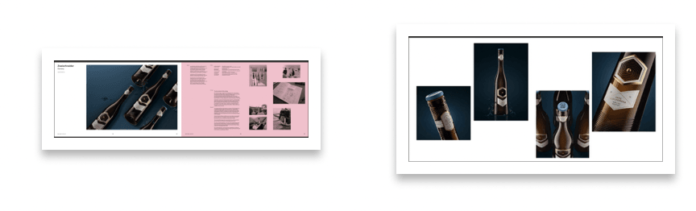
Designers had access to the latest industry developments and packaging technologies, and were encouraged to think without cost or technological constraints to push their creativity further and break new ground in packaging innovation. Ideas were transformed into physical prototypes using glass from Estal, label materials from Avery Dennison and printing tools and embellishments from the Kurz Group. They were presented at Luxe Pack Monaco and are the subject of a special digital edition designed to inspire the global design community.

This year's designs are varied, with new concepts, textures and materials explored. Designers have not only pushed back expectations with bold innovations and designs, but have even challenged existing business models. Here are just a few of these superb designs:

-       Officina Graficafrom Italy, chose water scarcity as its central theme. Believing that everyone has the right to clean drinking water, regardless of gender, race, religion, income or social class, the team drew inspiration from Estal Rude's collection, a selection of customized bottles in recycled Wild Glass 100%. The result is an exquisite design with flowing water on the outside and the brand's manifesto inside the bottle.

- The French language Partisan of Sense has created a playful range of cocktails to appeal to the tribes of Generation Z. The playfulness is expressed through feelings of variation, diversity and generosity, with a design exploring volumes, colors and textures. The glass plays on different colors and textures, but it's the Avery Dennison label that ties the layers together. Hot stamping with Kurz products expresses the brand's bright, high-end look.

-       56 Mar Design StudioIn designing its perfume bottles, the Dubai-based company has drawn inspiration from Pharaonic culture. The bottle is shaped like a falcon, the sacred animal of Horus, with a cap in the design of the Tutankhamen statue. The hieroglyphs are adorned with gold finishes, while Avery Dennison's Fasson Bright Foil Gold, a gold-tone material, is used to highlight the richness of Egyptian culture.

In a joint statement issued on behalf of Estal, Avery Dennison and Kurz, Vladimir Tyulpin, Head of Avery Dennison's Premium Market Segment said: "We asked our designers to let their imaginations run wild and create the unexpected, and that's exactly what they delivered. This year's concepts invite us all to reinvent what's possible in packaging design and the positive messages it can convey. We hope this will start a global conversation around dynamic, bold and creative new ideas. "

Officina Grafica's founders and creative directors, Vincenzo Macarrone and Tommaso Pecchioli, talked about their work and how they approached the Make a Mark project: "For over 15 years, we've loved dressing up wine bottles. This year, with the Manifesto project, we wanted to get an important message across to everyone, and leave an indelible mark on social communication applied to design."

Other designers involved in Make a Mark include:

43'oz design studioRepublic of Moldova: driven by the desire to transcend time and leave a lasting mark on the world, the team created a wine so ancient that it has become a museum piece.

Aktiva Brand Experience DesignSpain: Vannity is a fragrance concept that represents us physically, emotionally and virtually.

Apartment103France: "Saulvage" is a concept for spirits about climate catastrophes. Each variant features a piece of wood damaged by fire, raising awareness of the challenges facing humanity.

Black Eye ProjectUK: the phrase "What's your poison?" is the inspiration behind this concept, which draws on Victorian aesthetics and the eerie world of vintage poison bottles.

Black Squid DesignAustralia: The "Floater", traditionally a meat pie floating in pea soup and eaten with a spoon, is recreated in this design concept.

Bullet Inc.Japan: The city of Tokyo and its melting pot of cultures and values is the inspiration behind this bottle of sake.

FlovPoland: Happiness, the joy of bubbles and childhood memories are evoked by "Vivané", a name that combines the words "viva" meaning "to live" and "né" meaning "born" - a design vision that praises life. 

forceMajeureUSA: A fragrance focused on a lasting solution for self-expression. The result is a ritual of filling and spraying.

Lonsdale, France: This concept is based on the vetiver plant and its noble heritage, and aims to challenge the perfume industry and create a new perception of luxury.

Maba, Spain: Nan Madol, an organic and unexplained vodka, tells the story of a small island in an enclave of paradise.

Morillas, Spain: a bottle design strongly linked to the interstellar environment, reflecting the future of spirits.

O,Nice! Design StudioItaly: For a third of humanity, drinking water is already considered a luxury. This project is a 50 cl bottle filled with running water, designed as premium packaging to show just how precious water really is.

Popular Packaging GmbHGermany: for this bottle of traditional German gin, the studio created an abstract version of a journey through a German garden, reflecting the fact that every gin is a journey of smells, essences and tastes.

Sociedad AnónimaMexico: the archaeological expressions of Mesoamerica have inspired Mesoamerican rum. This project focuses on the product's geographical and cultural origins, without resorting to stereotypes.

Sure B randesignArgentina: Gintography (Gin + Typographic) pays tribute to the first printing system, the movable type press created by Gutenberg in 1440.

ThinkBoldStudioPortugal: Cognac Garnier evokes the golden age of the Beaux-Arts and is inspired by the luxury and opulence of Monte Carlo's casino and opera house.

Zweischneider GmbH & Co. Co. KG, Germany: A design to reflect the changing wine industry and how climatic influences impact culture. This concept makes the DNA of each vintage, including the number of bottles and alcohol content, tangible for the consumer.
Luxe Pack Monaco welcomes 9,430 visitors including 53% of international visitors

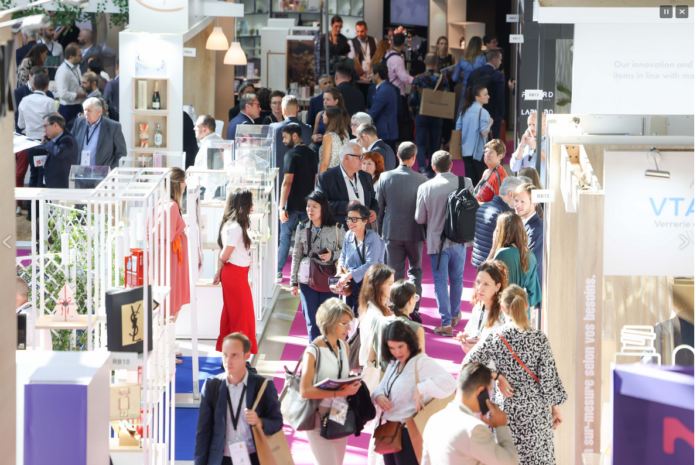
The 34th edition of Luxe Pack Monaco, the annual meeting place for creative packaging professionals, welcomed 9,430 visitors on October 3-4-5, representing growth of +20% vs 2021 and +5% vs 2019. The return in visitor numbers and the dynamic exchanges confirm the appeal of this not-to-be-missed event for the entire premium packaging industry. In addition to quantity, exhibitors once again praised the quality of the visitors.

" We regained and even exceeded the attendance levels of our pre-Covid shows. This year's event was very well attended, with the return of international visitors from the United States, the United Kingdom, Italy and the Middle East, some of whom we had missed last year. The exceptional quality of the high-profile decision-makers once again underlined the unmissable nature of this event. It's here that new relationships are forged, new projects are launched, and new collaborations between exhibitors are forged. It's an extraordinary network. "underlines Fabienne Germond, Show Manager, who reminds us that " Luxe Pack's role is also to provide an enlightened view of innovations and developments in all materials in terms of eco-responsibility, since this issue is at the heart of the strategy of all suppliers and principals, whatever their sector of activity. "

Every year since 1988, Luxe Pack Monaco has been the rallying point for all premium packaging professionals, who come to take the pulse of the sector, exchange ideas with their peers, discover new concepts, product innovations and services, decipher the market's major influences and emerging trends, and find new partners to spark business opportunities.

For three days, Luxe Pack Monaco brought together the entire creative packaging ecosystem: all the big names in primary and secondary packaging, finishing and decoration, design, etc. were present. On the visitor side, the biggest French and international brands from a wide range of sectors (cosmetics, perfume, wines & spirits, delicatessen, fashion, etc.) were able to find the packaging that sets them apart, whether by its design, its performance, or its eco-responsibility.

International visitors increased by 5 points compared to 2021, reaching a majority share of 53%. This international scope has enabled the show to be the venue for decisive meetings to address current supply chain issues and define the actions to be taken in the current economic and geographical context.

A growing Green focus

This 2022 edition confirmed the 450 exhibitors' commitment to eco-design and sustainability, enabling them to deliver the fruits of their efforts to reduce, recycle or reuse packaging. Booths showcased single-material innovations, refillable packaging and 100% recycled-based materials.

Symbolizing this enthusiasm, the Luxe Pack in Green awards, in partnership with Infinity Global, were particularly eagerly awaited this year, with over 62 entries received.

In the "eco-designed packaging solutions" category, the jury of experts voted for Arjowiggins, which presented Sylvicta, a translucent, functional food-contact paper that offers brands a high-quality barrier packaging solution, enabling them to offer an effective compostable solution.

In the "CSR Initiative" category, Altus Coating won the award. Founded in 2007, this small independent company aims to meet its commitments by organizing itself in a responsible manner to improve its economic, social and environmental performance, reduce its impact and meet the ever-increasing demands of its customers and principals. The mobilization of 1 employee out of 15 dedicated to CSR issues was praised by the jury of experts.

Save the date

La 35ème edition of LUXE PACK Monaco will take place on October 02-03-04, 2023, at the Grimaldi Forum.

Acti Pack expands its product range

Acti Pack, specialist for 30 years in Pet and R-Pet jars, squeezers and bottles, is present in the hygiene-beauty, food and miscellaneous product markets in Europe.

To support its customers in their choice of packaging and offer them ever more innovative solutions that meet market requirements, Acti Pack offers a wide range of standard products as well as customized packaging solutions.

Its product ranges are available as standard with closure solutions specifically adapted to consumer needs: pouring caps with or without valve, screw caps or milling caps, ... complete packaging solutions ready for filling.

Thanks to ISBM Hot Fill technology, combining machine processes and dedicated tooling for hot filling, their "Hot Fill" model, the Pet Volcano squeezer, completes the product range: available in 500ml, it is suitable for a maximum filling temperature of 90°, which may vary according to the products being packed, the packaging & cooling process and storage.

Present in most French and European supermarkets, the wide choice of standard models and numerous customized developments also enable them to support cosmetics brands in the packaging of their products.

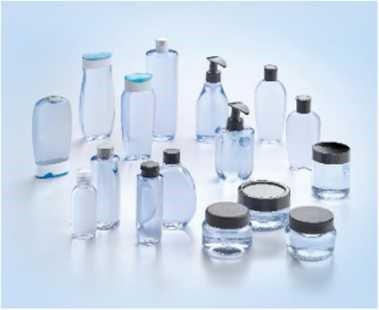
Its standard ranges of jars, bottles and tottle bottles in Pet and RPet from 50 ml to 1000 ml are adapted to the many applications in the sector, such as shampoos, shower gels, micellar waters, washing gels, hair gels, sun care products, care creams, bath salts, etc.

These developments are carried out in partnership with Loire Plastic Industrie, a specialist in plastic injection molding, in order to offer suitable closure solutions for the creation of a perfect whole: service caps or single caps, screwed or clipped, mono or bi-color, to meet market demands.

New Pet pill dispenser models have recently been added to the range. Aimed at the parapharmacy and dietary supplement markets, the Vital 300 ml and Vitamin 250 ml pillboxes have been added to the standard range.

While the Vital 300 ml model features a standard screw ring for metal caps, the Vitamin 250 ml pill dispenser is fitted with a tamper-evident ring and a tamper-evident closure.ere opening.

The new range of Pet "Isil" bottles, meaning "discreet" in Basque, for the hygiene-beauty market.

This new development of bottles, available in Pet and RPet, is offered in collaboration with Loire Plastic Industrie, a specialist in plastic injection molding, making it possible to present a complete bottle + cap package.

The design of the new "Isil" range is discreet, with strict shoulders and a cylindrical shape. Discretion is expressed through the flat, slender collar and associated cap.

The capsule was the subject of an eco-design study in terms of size and weight, in order to achieve the most optimal "Bottle/Capsule" pairing possible, with a weight reduction of over 15% compared with our current equivalent models.

The "Isil" capsule is compatible with the Ista-6-Amazon standard and offers tamper-proofing and security when the product is opened for the first time.

Initially available in a 200 ml format, additional capacities of 150 ml to 400 ml are planned in the near future.

For many years, Acti Pack has been committed to respecting and protecting the environment, and to eco-design of its packaging.

To support its customers, Acti Pack offers alternative solutions in the use of eco-responsible materials. For example, all its ranges of standard and special Pet jars, squeezers and bottles are available in RPet recycled materials. Depending on customer requirements, the company can offer products made from 25%, 50% or 100% recycled pet material.

RPet is certified for food contact and 100% recyclable!

The company is also committed to offering lightweight solutions to its customers in order to reduce the weight of its packaging as much as possible, while retaining the properties necessary for product packaging.

Firmenich inaugurates its new campus in Geneva

This ultramodern campus represents an investment of almost CHF 200 million and confirms the long-term importance of Geneva in the company's global activities.

Firmenich, the world's largest privately-owned fragrance and flavor company, today officially inaugurated its new campus in Geneva, in the presence of VIPs and local authorities. With its unrivalled production capacity, this new campus, which is at the cutting edge of the industry from a technological point of view, reflects Firmenich's commitment to operational excellence. The total investment for this multi-year project amounts to almost 200 million Swiss francs, and confirms the long-term importance of Geneva.

Our state-of-the-art campus will be a key element in accelerating innovation and driving our global expansion" said Gilbert Ghostine, CEO of Firmenich. " This new campus in Geneva is our largest site in the world and one of the most advanced in the industry in terms of technology, digitalization, innovation, science and natural products. True to our pioneering spirit, we have developed it with the aim of offering superior services and experiences to our customers, from fragrance creation or food ingredient development, to fully integrated production, while reducing our environmental footprint.. "

This investment of almost 200 million Swiss francs is the largest Firmenich has ever made on a single site." commented Patrick Firmenich, Chairman of the Board. " This site takes our industry even further in its quest for excellence, and allows us to proudly set a new standard in Geneva, the heart of the global fragrance and taste industry. This site integrates cutting-edge technologies, nurtures innovation and seeks to push back the boundaries of scientific research. With this unique industrial project, we are strengthening our center of excellence in Geneva for our long-term growth.

At the official ceremony, Mauro Poggia, President of the Conseil d'État and State Councillor in charge of Geneva's Department of Security, Population and Health (DSPS), declared: " Firmenich is an industrial flagship which, par excellence, embodies a number of values specific to the canton of Geneva: it is a link between cultures and identities, an attachment to roots combined with an openness to the world.

The ceremony was attended by the mayors of the communes of Satigny and Dardagny, representatives of the authorities and administration, researchers, representatives of civil society and business leaders.

The new Geneva campus is located in two communes, Satigny and La Plaine. The combined surface area is 225'OOOm2132,000m² of infrastructure.2of which 22,000m2 new, highly sophisticated facilities. Firmenich Genève boasts three state-of-the-art production plants, as well as adjacent laboratories for the creation of fragrances, flavours and ingredients; a logistics platform and automated warehouse; a pilot plant for biotechnology research and development; and a pavilion dedicated to staff exchanges and catering.

The campus builds on the company's vision of future-proof operation, optimizing end-to-end workflows, capitalizing on industry best practices and integrating the latest robotics and artificial intelligence innovations.

In addition to its operational excellence, the campus is designed to have a limited impact on the environment, thanks to innovative construction and intelligent eco-management strategies. The new buildings benefit from reduced energy requirements for heating and cooling. An intelligent system of thermal envelopes significantly reduces heat loss, while renewable energy sources, such as heat pumps and geothermal drilling, are integrated to reduce dependence on fossil fuels.

Numerous green spaces in and around the central pavilion, including a vegetated roof, are part of the drive to create a habitat for flora and fauna, thus enhancing biodiversity. The green roof also improves thermal insulation and rainwater retention.

The award-winning design of the new campus puts employee well-being at its heart by maximizing natural lighting in laboratories and offices. Versatile, open-plan workplaces encourage collaboration, innovation and knowledge sharing.

The site promotes low-impact mobility and is equipped with charging stations for electric vehicles and ample space for bicycles.

The Geneva campus was built in several phases starting in December 2017, with the final fit-out completed in February 2021. The campus is home to 1,450 people, including some of the world's leading scientists, fragrance and taste creators, technicians and operators.

Biotechnology, an unlimited potential

With its limitless potential, biotechnology is inspired by nature. Thanks to biotechnology, we can exploit the properties of living organisms without impacting the environment. In fact, it enables us to offer intelligent alternatives that meet consumers' growing demands for performance and sustainability. In our industry, biotechnology is based on the exploitation of the cellular and biomolecular processes of living organisms other than animals, with the aim of developing cosmetic products. Frédéric De Baene is Director of Biotechnology R&D for the Croda Group. I'm always curious and amazed at what nature has developed to evolve, survive and defend itself. Indeed, nature is extremely powerful and offers us its incredible capacities to produce molecules of interest. "

It won't be long before Croda presents its first functional ingredient derived from the biofermentation of micro-organisms. In the meantime, a report dedicated to this promising technology is available. It deals with the benefits, innovations, opportunities and obstacles linked to biotechnology.


Sederma, a leader in the design of active cosmetic ingredients, is a dynamic player in the biotechnology sector. With a third of its catalog made up of biotechnology-derived products, Sederma supports Croda in the development of biosourced ingredients.

Its confidence in the unlimited potential of biotechnology has prompted Croda to strengthen its innovation and production capacity in the field. In 2012, Croda acquired Italy's IRB, an expert in plant biotechnology, followed by Nautilus in 2018, a Canadian company working on marine micro-organisms.


The intelligent use of science through biotechnology enables us to offer consumers biobased ingredients that meet their expectations in terms of sustainability and performance. This approach is perfectly in line with Croda's commitment to be positive for the climate, the earth and people by 2030.

The Autajon Group strengthens its presence in the USA

The family-owned Autajon Group is a major player in the manufacture of folding cartons, labels, boxes and POP displays for Perfumes & Cosmetics, Pharmaceuticals, Wines & Spirits, as well as Confectionery & other Premium Food Specialties. The Group, based in Montélimar (Drôme), began to expand internationally in the early 2000s, and since then has continued to grow and develop its network of factories through subsidiaries on the European, American and Asian continents. Gérard Autajon, his sons Roman and Robin, and the Group's Management Committee are continuing this external growth with the acquisition of Zapp Packaging in California, a new company specializing in cardboard packaging.

Gérard Autajon adds: " We are delighted that Zapp Packaging is joining our Group, and proud to be able to share our technical expertise with them. Together, we will be able to perfect our skills. Our Group is thus strengthening its production capacities in the US market, and opening up new opportunities. ".

AUTAJON PACKAGING ZAPP Ontario California 1- Sponsored content - Market info

An innovation to recycle cosmetic products

TerraCycle is an innovative company in the fight against waste, and offers recycling solutions for waste considered "difficult to recycle". 

For beauty professionals, TerraCycle has created a line of "Zero Waste Boxes" to transform cosmetic waste into a new raw material used in the manufacture of new objects, thus limiting the need to extract oil to create new virgin plastic.

This solution will prevent unrecycled waste from being sent to landfills where it remains for years, taking up a lot of space and sometimes releasing chemicals that are harmful to the environment, or from being incinerated and producing harmful gases. In the worst case, this waste can also end up in oceans and rivers, adding to the problem of environmental pollution.

Indeed, not all cosmetics can be "traditionally" recycled: the sorting instructions may vary according to the department or the municipality, and not all products accepted in the sorting bin can be recycled, often for reasons of economic opportunities. This is often the case for products made of several materials, such as make-up products. 

The Zero Waste Box allows the company to lighten the environmental footprint of its professional activity, but also to raise the awareness of its employees on the subject of plastic pollution and to offer customers a recycling solution, to improve their rate of frequentation and loyalty. 

To put in the zero waste box:

  • Packaging for body products such as sunscreens, shower gels and creams, moisturizers and hand and foot care products
  • Hair product packaging such as shampoo and conditioner bottles, masks and oils, gels and foams
  • Packaging for facial products such as make-up removers and cleansers, masks and scrubs, moisturizers, anti-aging creams and lip care products
  • Makeup products such as foundations, eyeliners, mascaras and lipsticks
  • Other cosmetic products: Empty perfume bottles, empty nail polish bottles, empty nail polish remover bottles

How does it work?

The boxes are available on the "Zero Waste Box" website. They are delivered to the site, where staff and/or customers can fill them with accepted waste. Once filled, you can use the pre-paid, pre-applied shipping labels to return the boxes to TerraCycle where they will be sorted and the waste sent for processing. The price of each zero waste box covers the cost of the box, shipping, storage in the materials storage and processing center, as well as the cost of transportation and waste sorting. 

TerraCycle then works with one of our partners who transforms the waste into a reusable raw material. The waste sent for recycling is shredded, washed and turned into agglomerates or granules. These pellets can then be melted down and molded by manufacturers to create new products such as planters, soap dishes or watering cans. 

Please note:

Retailers have the ability to customize the boxes with their own branding to encourage customer traffic and engagement. They can also benefit from internal and external communication support. 

The Jeanne en Provence organic hand beauty range is expanding

Jeanne de Provence's organic almond and apple ranges are enriched with new creams and hand washing gels.

Creamy and rich in moisturizing agents, the hand creams 50 ml certified Bio Jeanne en Provence, offer a sensory and olfactory experience for an absolute softness and a long-lasting hydration (8 h of the superficial layers of the skin).

The hand washing gels certified Bio Jeanne en Provence, clean the hands gently and take care of the skin. Their gel texture and their fine and unctuous foam leave the skin clean and delicately perfumed.

Jeanne en Provence invites you on a journey to the heart of Provence to discover its scents, its nature and its art of living... Based in Grasse, Jeanne en Provence pays tribute to the richness of the Provençal soil and the generosity of its fragrant ingredients through its authentic and emotionally-charged products: perfumes and body care products, developed in the pure tradition of the Grasse master perfumers.

Our last issue

Listen to us!

Newsletter