







Research into artificial intelligence skincare is increasing dramatically, leading consumers to explore new beauty technologies.
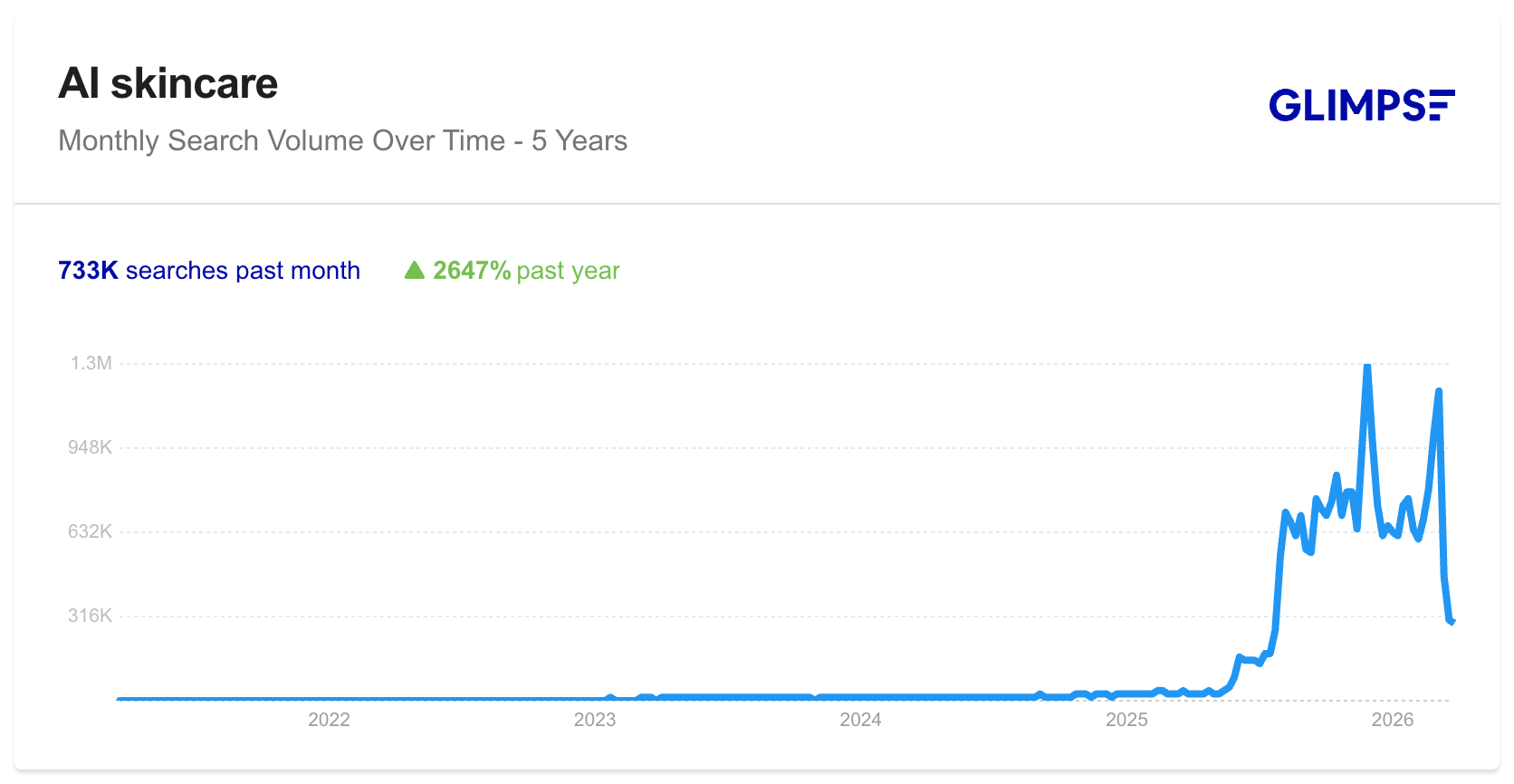
According to research data analyzed by Fresha, searches for “AI skincare” reached 733,000 over the past month, up 2,647 % year-on-year. This surge reflects consumers' growing interest in a new wave of beauty technologies, from skin analysis via selfies to AI-assisted devices designed to personalize skincare at home.
AI skincare: understanding and limits
While AI is becoming increasingly visible in the beauty world, Fresha points out that many consumers still don't fully understand what these tools are, what they can really do, and where their limits begin. Danielle Louise, beauty expert on the Fresha app, said, « AI skincare is taking off because it promises two things that beauty consumers are looking for today: personalization and convenience. "
The AI skincare products that fuel this boom fall into a number of well-defined categories. These include:
- Skin analysis and selfie scan tools for assessing visible skin features.
- AI-based product recommendation platforms, using facial scans and questionnaires to recommend suitable products.
- Intelligent care devices, adapting treatments according to information provided by the user.
- Predictive technologies for the skin, assessing how the skin may react to certain ingredients.
However, it is crucial that consumers remain vigilant in the event of dermatological problems. Danielle Louise warns: “« The danger arises when consumers begin to believe that an intelligent beauty tool can tell them everything they need to know about their skin. It can't. "
Why is AI skincare so popular now?
The rise of AI skincare reflects an evolution in the way consumers approach beauty. Danielle Louise adds, « Consumers are becoming more selective in their purchases, but at the same time, they are exposed to more products than ever before. "
This shift is reinforced by consumers' desire for personalization in their skincare routines, while seeking to avoid the increased complexity of too many options. Trust in these products will depend on brands being transparent about the distinction between practicality and true expertise.