







Sebum is a complex mixture of lipids secreted by sebocytes and deposited in the stratum corneum to contribute to the skin's barrier function. Disruption of sebum production is associated with skin conditions such as acne or atopic dermatitis, and also affects the appearance and beauty of the skin, contributing to the development of oily or dry skin.
Confirmation in vivoIn vitro testing of efficacy in healthy volunteers remains a critical stage, with a high failure or disappointment rate. This is why cosmetics laboratories continue to search for the most relevant biological markers, and to develop test methods that will enable them to assess the efficacy of their products. in vitro fast, easy to install, robust and.., in fine, as predictive as possible.
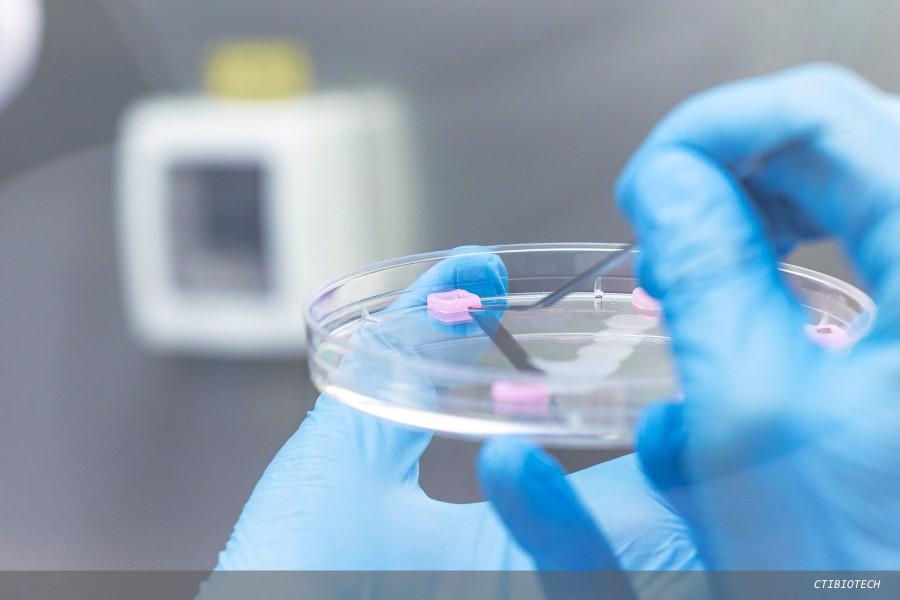
Gattefossé and CTIBiotech have joined forces to develop a 3D bio-printed model of the skin incorporating sebocytes, which can be used to measure the following parameters in vitro non-invasive measurement techniques in vivo and experimental laboratory data.
Bioimpedance (or bioelectrical impedance analysis) has long been used to monitor changes in our body fat mass, making it a personalized indicator for monitoring our health at home (bathroom scales). Using connected tools, Gattefossé and CTIBiotech have used bioimpedance to assess changes in the local environment of a 3D skin model incorporating sebocytes. Measuring such non-invasive electrical activity enabled real-time monitoring of sebum production, alongside laboratory analyses of the model's cellular, matrix and tissue development.
Bio-impedance has long been used in our bathroom scales and by dieticians to understand overall body composition. Applying this technique to the skin is an obvious step forward, but the real innovation lies in the development of real-time analysis of sebum changes. We have perfected our 3D-printed full-skin models with an integrated bio-impedance chip connected to monitor changes. By linking cosmetics screening in this way, we're making faster progress towards human testing and increasing our ability to make more effective products, explains Prof. Colin McGuckin, President and Scientific Director, CTIBiotech
Sebocyte-containing skin models have reproducible sebum production, which is increased by linoleic acid and decreased by Tofa. This is characterized by significant changes in bioimpedance both in the imprinted tissue and in the surrounding culture supernatants. Bioimpedance, linked to sebum production, is therefore proving to be a clean, non-invasive in vitro parameter that can be measured in real time, to design ever more predictive and effective tests: indeed, the 3D models described here and linked to a simple chip system, accurately reflect changes in both skin models and living donors. "explains Dr. Nicolas Bechetoille, Ph.D/HDR - Head of R&D skin biology, Gattefossé
This work will be presented at the 32ème IFSCC Congress in London, September 19-22, 2022