






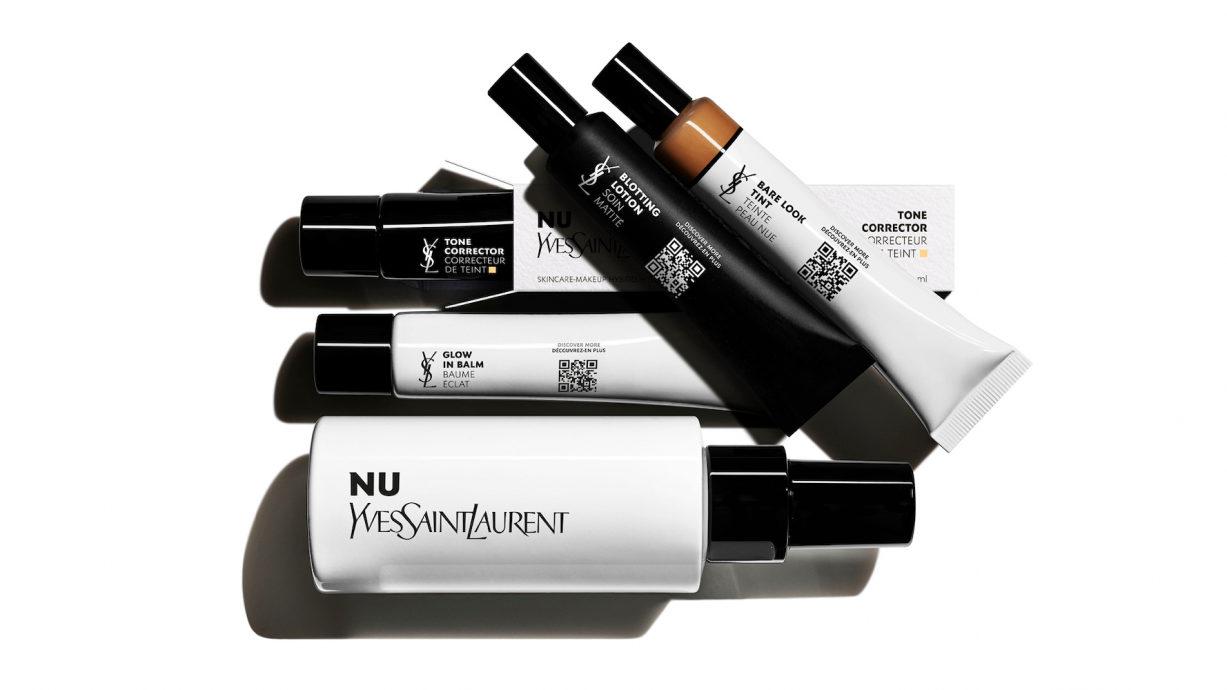
YSL Beauté's new hybrid makeup and skincare line "Nu" has just received the Cradle to Cradle Silver certification. This is the first time that a range of beauty products manufactured in France has received this very demanding certification. Calvin Klein CK Everyone eau de parfum, from Coty, follows suit and has just been certified Cradle to Cradle Gold. The circular economy is sweeping through our bathrooms and it is a fundamental trend.
Today, consumers are demanding much more: transparency on the origin of ingredients, respect for harvesters, reduction of environmental impact, a recycling program, eco-designed packaging ... More than an awareness, a real philosophy now advocated by the major brands that are multiplying commitments to develop sustainable products to limit their impact on the environment, from design to manufacture, until their end of life. But how to accelerate the deployment of sustainable products throughout the beauty and cosmetics industry? The Cradle to Cradle Products Innovation Institute takes stock of good practices for the well-being of the skin and the planet.
Objective: circular economy
The way companies design and manufacture products today has a direct impact on the world of tomorrow. The beauty sector is therefore also confronted with environmental challenges to sustain its activities, meet customers' aspirations, and innovate in a context of ethical exemplarity.
The AGEC law, set up to defend a rapid and significant ecological transition, promotes the saving of resources, raw materials, energy, water, the limitation of waste and their reuse. It includes 130 articles, 29 of which are directly related to the "hygiene and beauty" sector, including cosmetics.
The law provides for the disappearance of single-use plastic packaging by 2040 and 100% of recycled plastic packaging by 2025. This requires the cosmetics sector to respect 3 orders: re-use, re-cycle and re-cycle. It also prohibits the destruction of unsold products and requires its management. With these measures, the Federation of Beauty Companies (FEBEA) expects a saving of 8,500 tons of plastic by 2025.
In this context, work on eco-design and reuse of packaging is accelerating, and waste management is improving to promote more responsible consumption. The circular economy appears to be one of the solutions to meet these constraints and reduce the plastic footprint.
Cradle to Cradle Products Innovation Institute: a holistic approach
Different brands are already engaged in circular economy approaches but often they are reduced to the sole issue of waste or to a single attribute of the circular economy, forgetting the essential issues. To anchor an economic model in a sustainable sobriety approach, comprehensive solutions exist such as the Cradle to Cradle Products Innovation Institute.