Amoéba, an industrial greentech specializing in the development of natural microbiological solutions based on the patented exploitation of amoebae, announces the signature of an agreement with Metron Technology, a subsidiary of the Chinese Oriental Beauty Valley group (OBV Group). This agreement confirms the main terms of the memorandum of understanding announced on April 1, 2025, and covers both the regulatory and commercial aspects of Amoéba's cosmetic ingredient in China.
The agreement provides for support and advice from the Oriental Beauty Valley group in obtaining approval for Amoéba's cosmetic ingredient in China, as well as priority for Metron Technology to distribute Amoéba's cosmetic ingredient in China once approval has been obtained.
Amoéba steps up development of its cosmetics business
While Amoéba's cosmetic ingredient was already included on the Inci list in 2024, enabling it to be marketed without further authorization worldwide with the exception of China, this agreement enables Amoéba to accelerate its entry into the Chinese market, the world's second-largest cosmetics market after the United States.
Following the arrival of Charlotte Franceries - a former member of L'Oréal's top management for 25 years and currently President of the McCann Group's French agency - to its Board of Directors, who will bring all her expertise and knowledge of the cosmetics industry, Amoéba has now taken a new step in the development of its cosmetics business.
"We are delighted to sign this agreement with the Oriental Beauty Valley (OBV) group, which is the ideal partner to support our development in China. While we have already achieved many key milestones in biocontrol this year, we are now accelerating the development of our cosmetics segment with players recognized worldwide for their expertise. We are proud that the full potential of our cosmetic ingredient has been recognized by the OBV group, a global reference player, and we are demonstrating our ability to pursue our ambitious development trajectory".said Benoît Villers, Chairman of Amoéba's Board of Directors.
The Oriental Beauty Valley group, based in Shanghai, is an industrial cluster supported by the Chinese authorities as part of their national development strategy for the cosmetics sector. It brings together over 1,000 companies (including L'Oréal, Shiseido etc.), laboratories, research centers and specialized organizations, forming an ecosystem that fosters synergies between innovation, production and regulation, and offers a structured environment to support innovative projects, from formulation to regulatory compliance.
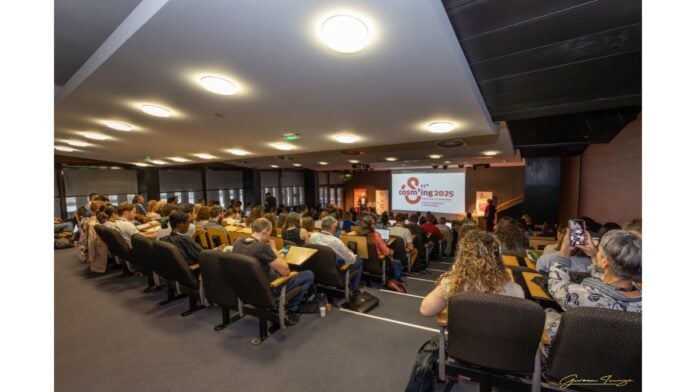
Faced with environmental and societal challenges, the world of cosmetics is turning a corner, with more and more players reviewing their practices to adopt more sustainable, transparent and fairer approaches. From June 11 to 13, Saint-Malo's Palais du Grand Large was the venue for Cosm'ing 2025, a must-attend event for over 25 years for experts in biotechnology-based cosmetic ingredients. Organized by Biotech Santé Bretagne, the event brought together professionals to share their latest advances. Their aim was to show how the synergy between nature, science and technological innovation can support the sector's transition to a more responsible future.
Ethics, the compass of progress in cosmetics?
The word "ethics" is increasingly becoming a pillar of cosmetics discourse. This is what Michèle Barbier, a researcher at the Inria Centre at the Université Côte d'Azur, emphasized at the start of her talk. In her view, adopting an ethical approach means above all taking a long-term view, where technological and scientific advances must benefit both society and the environment. This means meeting major challenges: preserving biodiversity, limiting the depletion of natural resources, and above all, striking a balance between innovation, preservation of the planet and society. In a field such as biotechnology, which is largely based on the exploitation of living organisms, sensitive questions arise: what place should be given to GMOs? What limits should be set to new genome-editing techniques? The same is true of emerging digital tools such as artificial intelligence and digital twins... What social acceptability should be given to all these new technologies?
Towards the optimization of bioproduction in cosmetics
Cosm'ing 2025 showcased the very latest innovations in the bioproduction of cosmetic ingredients, thanks in particular to the many micro-organisms that have become cellular factories promoting the diversity of metabolic pathways. These include Saccharomyces cerevisiae Givaudan for the production of low-molecular-weight hyaluronic acid, and Lantana Bio for the production of anthocyanins. Mibelle Biochemistry has developed the biotechnological production of moss biomass, called mossCellTec. Last but not least, Roelmi HPC France's SeidoTech Lux process uses a strain of Lactiplantibacillus plantarum to produce a bioactive complex rich in polyphenols, polysaccharides, proteins and fibers.
New concepts are also emerging, such as Codif International's SKin-Biotech, in which the skin microbiota acts as a micro-factory for active ingredients via fermentation. Lallemand is demonstrating that marine bacteria and some present on human skin, such as Staphylococcus epidermidis, can coexist and interact to protect and regenerate the skin. Seppic relies on a bank of rare macroalgae, cultivated sustainably to enrich cosmetic formulations. Finally, STH Biotech exploits the hair roots of hemp, promising for their protective metabolites, particularly in anti-aging.
Plants and microbiota: holobionts at the heart of bio-inspired innovation
The holobiont approach places the plant in a dynamic, co-evolving ecosystem. Today, it is the inspiration for numerous innovations in plant biotechnology. Such is the case at Bioeurope, which has drawn inspiration from the fungus Pseudozyma flocculosa to develop a glycolipid active against Staphylococcus aureus, targeting sensitive skin. At Croda, they use a polysaccharide derived from coral microbiota, plexaurane, to protect skin against pollution. Last but not least, Greentech uses the fermentation of Gentiana lutea to regenerate the cutaneous holobionte of mature skin.
Exosomes attack beauty
Today, exosomes are at the heart of advanced dermocosmetic research. Naturally produced by cells to communicate with each other, these tiny extracellular vesicles are attracting growing interest for their ability to transport active molecules (proteins, RNA, lipids) directly to skin cells. Used as vectors for targeted ingredients, they promote skin regeneration, stimulate collagen production and enhance tissue repair. For example, Capacités is exploring the production of extracellular vesicles (EVs) from Chlorella, a promising freshwater microalga. EVerZom offers an innovative industrial platform dedicated to the production, engineering and characterization of exosomes, via a CDMO service (Contract Development and Manufacturing Organization). Finally, Vytrus Biotech has developed a pioneering strategy for isolating and characterizing exosomes from cell cultures of Centella asiatica and Curcuma longarich in peptides, with proven effects on skin and hair, through tests in vitro and clinical trials.
The new keys to scientific investigation
Analysis techniques are evolving thanks to the convergence of "omics" approaches (genomics, proteomics, metabolomics...) and bioinformatics tools. At the Institut de Chimie Organique et Analytique d'Orléans, researchers are highlighting the growing interest of molecular networks to more rapidly identify bioactive compounds in complex mixtures. Phytox, in collaboration with the Rocher group, carries out guided fractionation of diatoms Cylindrotheca fusiformis and adopts the molecular network approach to reveal bioactive clusters. In addition, new tools such as the ExAdEx 3D tissue model or BioHive skin organoids offer advanced platforms for testing the efficacy, safety and repositioning of cosmetic actives in a more personalized approach.
What about artificial intelligence in cosmetics?
Although ethical issues are emerging, notably concerning the management of personal data and the transparency of algorithms, artificial intelligence (AI) is also profoundly transforming the cosmetics sector. In R&D, AI accelerates the discovery of active ingredients, optimizes formulations and predicts product efficacy. It also plays a key role in personalized skin diagnostics via mobile applications or connected tools, and in production, it improves manufacturing processes and traceability. It also helps reduce animal testing by simulating biological responses using predictive models. Artificial intelligence is thus becoming a major driver of innovation in cosmetics. As part of the European CYPher project, the Biomolecules Center at Ghent University is proposing a standardized production platform for terpenes and flavonoids, combining AI and synthetic biology. Other initiatives reinforce this trend towards using AI for greater performance. For example, MorphGen uses generative AI to design new copolymers, MeNow identifies bacterial bioactives via a structure-activity modeling platform, and Elysia Bioscience accelerates proteomic data processing with its ElyOm software. Finally, Cargill Beauty is exploring intelligent polymer mapping to develop more natural alternatives to petro-based polymers. AI thus paves the way for eco-designed, personalized and high-performance ingredients.
All the topics discussed at this symposium point to new promises of results in the more or less long term, which will certainly be highlighted at the next edition of Cosm'ing 2025, scheduled for June 30 to July 2, 2027!
Étonnants découvreurs" competition: science in stand-up mode!Developed in partnership with the GDR Cosm'actifs, this competition is aimed at doctoral students, whose mission is to present their thesis work in an original way, in 180 seconds. The 2025 prize was awarded to Morag Davidson, who completed her thesis in the LABCiS laboratory at the University of Limoges, on the eco-extraction of bioactive compounds from red fruit pomace. The aim is to develop an innovative extraction process based on the principles of green chemistry. In a single step, using a combination of enzymes, water and ultrasound, it produces bioactive compounds that reveal, via tests in vitroThese antioxidant and prebiotic properties are of great interest for cosmetic skincare products.
Delphine Pirot-Ayesse Research and Market Watch Manager - Biotech Santé Bretagne
For the ninth generation of its Double Serum, Clarins has teamed up with Aptar Beauty to completely redesign the bottle for its flagship product. The new packaging, the fruit of more than three years' development, embodies the technical expertise, innovative capacity and industrial strength of Aptar, a global specialist in beauty distribution systems.
The result is a patented dual-chamber bottle that gives the illusion of being suspended in a transparent body. This system embeds two distinct phases - hydrous and lipidic - which mix together at the moment of application. The tailor-made pump offers progressive dosing, from a single drop to a dab of product: turning the knob to the right delivers progressive dosing, while turning the knob to the left locks the dispensing system.
The new case is also distinguished by its eco-responsible design. According to Clarins, it contains 94 % of recyclable materials and 24 % of recycled materials.1 of recycled materials. Some 85% of the total product weight contains recycled PET (R-PET2) chemical and mechanical, including the double-chamber bottle and push-button. Aptar Beauty's Custom team rose to the challenge of decorating these recycled materials with a quality equivalent to luxury standards. ABS plastic was replaced by PET for key parts.
Made-to-measure
This tailor-made solution is an example of the dual sourcing service that Aptar Beauty can deploy for custom projects, thanks to synergies between its plants in Oyonnax, Charleval and Verneuil, as well as other industrial sites such as Le Neubourg (France) and Chieti (Italy). These interconnections help to secure manufacturing and logistics, right through to delivery of the final product. Aptar Beauty also relies on a well-established network of French subcontracting partners.
The Custom Beauty teams bring together all Aptar's know-how - in design, engineering, manufacturing technologies, decoration and logistics - to offer unique solutions for the luxury market.
For Clarins Double Serum, numerous molds were developed and qualified at two different sites, requiring several fully automated machines. The four formats (30, 50, 75 and 100 ml) were developed simultaneously, grouping common sub-assemblies for greater efficiency.
"We are very proud of this latest edition of Clarins' iconic Double Serum, for which we worked hand in hand with the customer, from creative concept to delivery of the finished product. This project embodies the full potential of our made-to-measure "Custom" business, our technical expertise and our manufacturing synergies."says Florence Muh, Director of Customer Service & Development at Aptar Beauty.
Synergies on a European scale
Aptar Beauty's Custom teams rely on local centers of expertise, specialized in engineering and design, to deploy a global vision. With over 70 years of expertise in luxury packaging, Aptar Beauty also leverages synergies between its seven production sites based in Europe. Thanks to this interconnected industrial ecosystem, the company produces custom solutions for the world's leading beauty brands.
Each Aptar production unit offers tailor-made services, each with its own specialty: fragrance pumps, airless technology, cosmetic pumps, metal parts, stick formats or sampling solutions. The Oyonnax industrial site is dedicated solely to the manufacture of customized packaging, offering agility, flexibility and operational efficiency, with a high production capacity for PCR (post-consumer recycled resin). Complete synergy between the sites ensures a reliable supply chain.
1. At least 40% of mechanical recycled resin or chemical recycled resin ISCC (Mass Balance) 2. Recycled Polyethylene Terephthalate
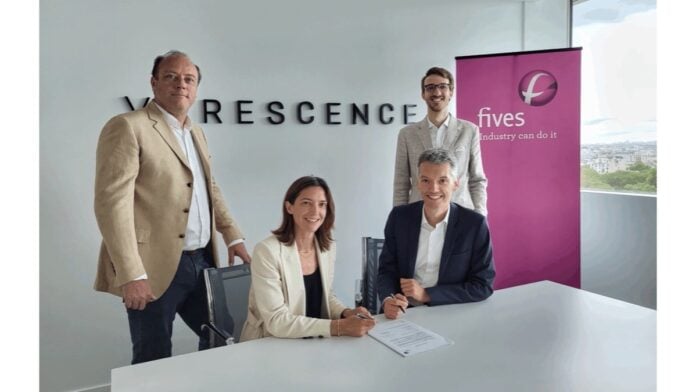
Verescence, the global specialist in luxury bottles for the perfume and cosmetics industry, and Fives, an international engineering group, have formed a partnership to replace an existing furnace.
The project involves replacing an existing furnace with a new oxy-gas hybrid technology at the Verescence site in Mers-les-Bains (80). According to the glassmaker, this will be the world's first hybrid furnace dedicated to cosmetics applications.
"This innovative project is part of Verescence's ambitious decarbonization roadmap, which is accompanied by major investments to electrify the industrial technologies and equipment used on our sites, including our furnaces, feeders and annealing arches."says Thomas Riou, President of Verescence.
"We are very proud to be carrying out this major project at our flagship Mers-les-Bains site. This is an important milestone for our French sites, in addition to all the actions taken by our teams since 2016 to reduce our CO2 emissions by 70 % by 2030".stresses Hélène Marchand, General Manager of Verescence France.
The new Prium Eco-Flex hybrid furnace will produce up to 150 tonnes of glass per day. It will run on a combination of oxygen-gas and electricity, replacing up to 80 % of fossil fuels with electrical energy. This configuration will drastically reduce carbon emissions while maintaining high-quality glass production.
The new furnace will be equipped with an HRA (Heat Recovery Area), developed by Fives, which recovers heat from flue gases directly in the furnace.
This solution improves the furnace's energy efficiency by preheating the load in a lowered section of the superstructure, generating additional efficiency gains.
"Our hybrid furnace technology has been designed to help glassmakers achieve ambitious environmental targets. It combines flexibility, energy efficiency and reduced emissions, for an ecological transition without compromising on glass quality."explains Alexandre Brusset, Glass Director at Fives.
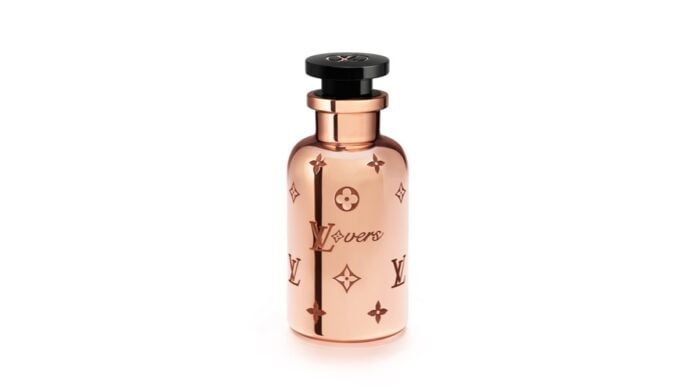
To mark the first anniversary of LVERS, Louis Vuitton has unveiled an ultra-limited edition of its iconic fragrance, the result of a collaboration between Pharrell Williams and master perfumer Jacques Cavallier Belletrud.
To enhance this fragrance: a pure copper bottle, the result of high-precision work by Artema Firenze craftsmen and the technical expertise of the Texen group, a benchmark player in luxury packaging.
"Inspired by the regenerating energy of the sun, LVERS reinvents itself through an objet d'art that reflects light, warmth and vitality. The fragrance captures the sun's abstraction in a holistic, sensory composition, composed of lively essences such as galbanum, cedarwood, sandalwood, bergamot and ginger, for an elixir of well-being that is both subtle and profound."says Texen.
The copper bottle, a tribute to the metal plates found on the trunks of 19th-century explorers, revisits the codes of the Louis Vuitton house. It is handcrafted using the lost-wax technique by Artema Firenze's master foundrymen. The Texen group was chosen to ensure perfect compatibility between the metal and the fragrance formula.
Flex" technology in the spotlight
To preserve the olfactory integrity of the juice and avoid any contact with copper, Texen has designed and developed a specific internal protective coating inserted by hand into each bottle.
This coating consists of a multi-layer flexible film guaranteeing watertightness and compatibility.Exclusively developed by the Group's experts to perfectly match the shape of the bottle, a pocket head has been positioned with millimetric precision at the neck.
A true feat of engineering in the service of aesthetics, this customized solution combines performance, durability and discretion. Already used by the Texen Group to produce innovative, made-to-measure packs, this "Flex" technology opens up a whole new world of possibilities.
"Thanks to its expertise in the design of innovative components and its ability to solve complex problems, the Group is strengthening the functional and sustainable dimension of an object designed to stand the test of time.the company says.
Since the acquisition of the Capardoni group by the Meazza family in 2003, this Italian SME operating in the packaging sector has multiplied its strategic acquisitions: no less than seven companies have been bought out in fifteen years (Packplast, Cosmar, B&B, Guiros, Novapack, Packtrade and recently Capsol, in November 2024). The result: sales in excess of €50 million, with a workforce of 149.
The company, historically based in Gorgonzola near Milan, is now able to serve the beauty, perfumery, pharmaceutical and food sectors, with a wide and differentiated range of packaging.
An integrated offer, between standards and exclusive creations
Capardoni intends to guarantee total industrial control of its processes: mold design and manufacture, management of renewable energy sources, in-house manufacturing in Italy.
Its portfolio includes standard and customized packaging for skin care (jars, glass and plastic bottles), nail polish (complete solutions), perfumery (customizable bottles and caps), hair and body care (PE, PET, PETG bottles), as well as innovations for the food segment, notably caps for aluminum tubes.
"One of Capardoni's strong points is supplying customized packaging: our customers come to us with an idea, and we develop exactly what they're looking for. But, increasingly, we are also launching standard packaging, analyzing market trends so that we can offer interesting solutions that are immediately available. This is crucial: the market is changing so fast that responsiveness is essential for our customers, explains Filippo Meazza, Vice-President Sales and Marketing. We avoid materials that are difficult to recycle at the end of their life cycle.
Innovation and sustainability
In recent years, the company has stepped up the pace of innovation in response to changing usage and regulatory pressure. Recent launches include:
Tottle Nevis 30 ml: a compact, all-purpose bottle, ideal for liquid or creamy formulas such as foundations, serums and hair care products. Made in HDPE or PP.
PP single-material dropper: an environmentally-friendly alternative to conventional models, made entirely of polypropylene (even the tube), which simplifies collection and recycling, while reducing the risk of breakage during production and shipping.
Diamond" dropper: uniquely designed dropper with diamond-shaped tip, offering an ergonomic and precise grip, 100 % PP.
Ruby panstick: a compact, single-material skincare stick designed to diversify cosmetic applications beyond lip balm (skincare, make-up, masks).
Chico: a new designer glass bottle with a rounded base, designed to hold foundation and serums.
FlipTop "360° security" flip-top cap: a patented, anti-theft, tamper-proof innovation designed for e-commerce. Once screwed on, it can no longer be unscrewed, avoiding the use of shrink sleeves which ensure product tamper evidence.
The merger between Capardoni and Capsol has enabled us to develop more sustainable packaging solutions than those already on the market, such as the single-material PP dropper or the FlipTop cap, which fully preserves product integrity.
Capardoni also offers wood and r-PP stoppers in various colors. "At the moment, there's a lot of recycled plastic on the market. But this poses a lot of problems for us, especially when it comes to color. Our market, especially the make-up and skincare market, is very colorful. So when you tell the customer that you can only get dark colors, they're not always very happy. So we tested and selected an r-PP material which contains 70 % of post-consumer recycled plastic, and which can perfectly match the pantone color the customer needs. In fact, the recycling system sets aside all the white and natural recycled plastic, enabling us to obtain the Pantone color required by the customer. So we're able to go beyond the dark color and get any color the customer wants.explains Filippo Meazza.
Capardoni sets its course for sustainability:
Massive integration of post-consumer recycled plastics in its industrial processes.
Use of renewable energies, installation of photovoltaic panels, and ISO 14001 certification.
Validation of its climate targets by the Science Based Targets Initiative (SBTi)
In January 2024, the company was awarded the EcoVadis Silver Medal, placing it in the top 15% worldwide for corporate social responsibility.
A partnership with Intimissimi
Intimissimi, a brand known for its lingerie collections, called on Capardoni to love its perfumes, beauty kits and home fragrances, which are appreciated by customers. "Of course, Intimissimi's core business is not perfume or cosmetics, but the brand is starting to invest more in this category, particularly as a gift idea or as part of promotional offers. The aim is to accompany the end customer and stimulate sales through this type of product".explains Filippo Meazza.
Two fragrances have been created for a men's fragrance. They are presented in a 50 ml black-lacquered glass bottle, decorated with a monochrome silk-screen print, with a weighted cap. For the women's fragrance, Intimissimi has chosen the standard 50 ml bottle with a round cap.
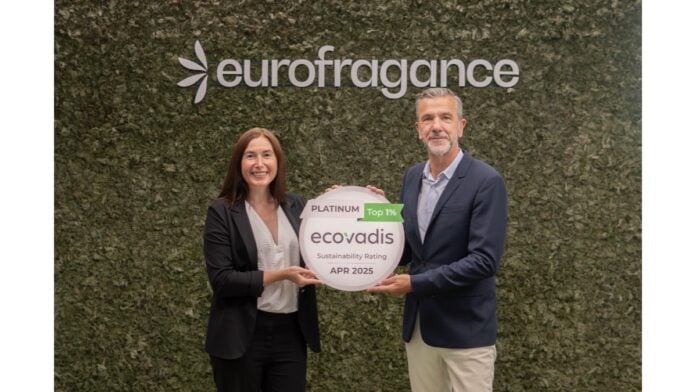
International perfumery house Eurofragance, has been awarded a Platinum medal for the second year running by EcoVadis, the highest distinction awarded by this independent sustainability assessment body. The award, based on activities and achievements in 2024, places Eurofragance among the top % companies in its sector assessed worldwide.
In 2024, the company not only continued to grow in terms of sales and headcount, but also strengthened its commitment to social and environmental initiatives. Despite a demanding context, Eurofragance improved its overall score in the EcoVadis assessment, reaching 82 out of 100 compared with 80 in 2023.
In the last financial year, Eurofragance generated sales of 180 million euros and employed over 500 people worldwide. At the same time, the perfume house implemented new sustainable actions in line with its roadmap, reinforcing the four key areas assessed by EcoVadis: environment, labor practices and human rights, ethics, and responsible purchasing.
In the environmental field, the company achieved a score of 85 out of 100 thanks to its efforts to reduce carbon emissions, which have fallen by 7 % since 2021, the reference year. In addition, in 2024, Eurofragance also reduced its water consumption by 7 % compared to the previous year, while cutting the amount of waste sent to landfill by 5 %. These figures illustrate the company's commitment to more efficient and respectful resource management.
With regard to ethics, Eurofragance has continued to roll out its internal training programs in all its subsidiaries, notably through the "Code of Ethics Training", "Anti-fraud Policy" and "Whistleblowing" modules.
The company also invested heavily in training its teams, with a total of 11,000 hours of training and professional development over the year.
In line with its sustainability strategy, Eurofragance has published its Sustainability Report 2024, highlighting major advances in safety, social responsibility, business ethics and resource management. Among the key points, the company has maintained the carbon neutrality of its production sites - a target achieved for the first time in 2023 - reduced its water consumption and waste, and strengthened its commitment to equality, diversity and employee well-being.
"Since the beginning of this journey, EcoVadis has been a benchmark that guides our actions towards concrete impacts, both for the planet and for our communities. Receiving a second consecutive Platinum Medal is a highly motivating recognition for all Eurofragance teams. We know that the requirements will be higher each year, but our ambition is to continue to meet these rigorous standards.said Diana March, Chief Sustainability & Technical Compliance Officer at Eurofragance.
Laurent Mercier, the company's CEO, adds: "Five years ago, Eurofragance embarked on its journey towards sustainability with conviction and determination. From this journey, I have learned some valuable lessons: the value of small victories that add up, the importance of setting realistic objectives and, above all, the certainty that sustainability and economic performance are not incompatible. Earning EcoVadis Platinum recognition two years in a row is not only gratifying, it also confirms that we are on the right track - and that there will be no turning back."
Created in Nice, France, Velvetvelo shakes up the codes of traditional perfumery with a collection of water-based, alcohol-free fragrances, combining sensoriality, technology and respect for the skin. Developed in partnership with the Mane laboratory, Velvetvelo creations incorporate olfactory innovations such as Aquafine, an exclusive water-scented emulsion technology, ensuring long-lasting fragrance without irritation or photosensitization; E-pure Jungle Essence, a solvent-free cold extraction process, to preserve the integrity of natural raw materials; and Green Motion, a strict sustainability assessment methodology, applied right from the design stage of each formula.
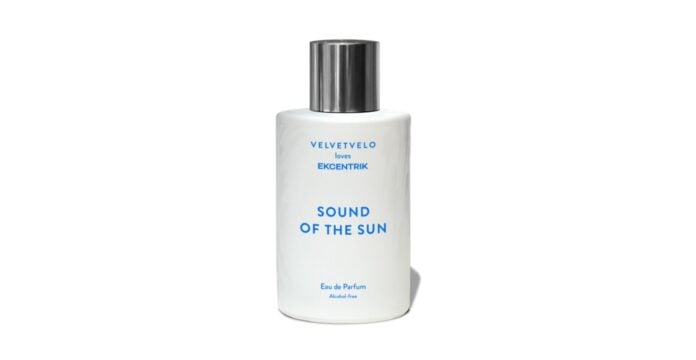
Velvetvelo's latest creation: Sound of the sun. Created in collaboration with Ekcentrik by perfumer Violaine Collas, this eau de parfum embodies a sunset on a sandy beach, as the light fades and the music soars. Monoï becomes synesthesia: coco-frangipani, freesia, creamy woods and sweet musks compose a warm, soft and persistent olfactory melody.
Designed for a new generation of consumers sensitive to clean beauty and concrete commitments, Velvetvelo also integrates a Sorga QR code on each bottle to guarantee complete traceability of creations: origin of ingredients, transparency of supply chains, production ethics.
With its evocative, poetic names, Rue des Mimosas and Un Homme à la Mer,
Archimède in Love, Sound of the Sun, the brand offers an intimate, sunny olfactory experience, embodying sensorial, modern, ethical perfumery.
Designed to promote the latest advances in cosmetology, the IFSCC 2025 (International Federation of Societies of Cosmetic Chemists) will host six interactive pre-congress workshops on September 15, 2025, in Cannes, offering cosmetics professionals the opportunity to deepen their knowledge. These highly anticipated sessions, led by world-renowned experts in their respective fields, will offer concrete information and highlight the latest breakthroughs shaping the future of beauty.
In particular, participants will explore the world of cognitive sensory science, to understand how our senses profoundly influence beauty experiences and product design. Workshops will also address the evolving landscape of safety and regulatory assessments, providing updates on compliance and future trends. For those wishing to share their findings, a session dedicated to scientific publication will offer advice on turning research into high-impact publications.
A special focus on sustainability in cosmetics will unveil formulation strategies, from responsible sourcing to bio-inspired ingredients, propelling the industry towards a greener future. Attendees will also benefit from in-depth information on bio-inspired eutectic solvents, a sustainable alternative for efficient release of active ingredients. Finally, a comprehensive workshop on suncare products will cover everything from the complexities of photoprotection to cutting-edge advances.
With a score of 80/100, Albéa ranks among the top 3 % companies assessed by EcoVadis. This is the Group's biggest step forward, as it has succeeded in improving its sustainability performance in all four themes assessed: environment, labor and human rights, ethics and sustainable procurement.
"The significant improvement in our overall score, particularly with regard to labor and human rights and sustainable sourcing, proves that our daily efforts and the actions implemented over the past year are bearing fruit, emphasized François Tassart, Albéa's Managing Director. The next step for us is to reach our target of 100 % audited factories by the end of the year, while working towards a consistent level of CSR. Our 13 Platinum-certified plants and 12 Gold-certified plants are our benchmark."
The packaging specialist's commitment to corporate social responsibility and sustainable development was rewarded with a gold medal for the sixth year running.